Native Plants
-
Puttering Around the Confederate Reunion Grounds State Historic Site
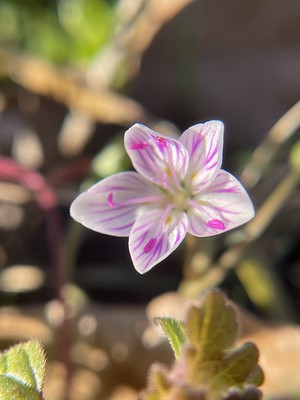
Jack’s Creek, which feeds into the Navasota River around the bend to the left of the photo. Virginia Springbeauty, Claytonia virginica A very chilly plain-bellied Watersnake, Nerodia erythrogaster. The Navasota River Hemisphaeric Liverwort, Reboulia hemisphaerica, with both male and female reproductive parts visible. I don’t usually see this species like this, usually it is in its non-reproductive phase. Close up of the female archegonium, the globular structures, and the darker, male antheridiums above. Leather Lichen, Dermatocarpon miniatum Effervescent Tarpaper Lichen, Collema furfuraceum A remnant fireplace, there were a couple of these around the grounds, if I recall correctly. Pennsylvania Pellitory, Parietaria pensylvanica, growing out of the fireplace. Rabdotus sp. I’m…
-
Late Winter at Fort Parker State Park
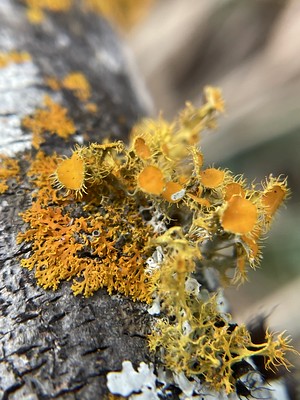
An interesting limestone creek wall with black maidenhair ferns, Adiantum capillus-veneris. Sound on for lovely creek sounds. Golden-eye Lichen, Teloschistes chrysophthalmus with a sunburst lichen, Xanthomendoza weberi. Winter Grapefern, Holubiella lunarioides White Avens, Geum canadense Common Script Lichen, Graphis scripta, with an unidentified liverwort. Orthotrichum pusillum moss with a rosette lichen, Physcia sp. Bare-bottom Sunburst Lichen, Xanthomendoza weberi Roundleaf Scurfpea, Pediomelum rhombifolium Alabama Lipfern, Myriopteris alabamensis Overlook of the Navasota River Bulbous Adder’s-Tongue, Ophioglossum crotalophoroides Cutgrass (Zizaniopsis miliacea) & creek A stately bur oak, Quercus macrocarpa Blunt Woodsia, Woodsia obtusa Small spring at the east end of the lake/Navasota River Ranunculus sp. at the spring In mid-January I went up…
-
Country Dirt Road Botanical Finds
Gaillardia aestivalis winkleri, white firewheel White firewheel with a nectaring little yellow, Eurema lisa This is a locally uncommon to rare grass, Gymnopogon ambiguus, bearded skeletongrass. I’ve only ever seen it over on the Big Sandy Creek Unit of the Big Thicket. I suspect it may be more common in some of these areas but people generally ignore grasses. Oenothera rhombipetala, fourpoint evening primrose A few weekends ago, Chris took a random dirt road that his GPS said to take to get to the Beaver Slide Trail in the Big Thicket. It was a pleasant drive, lots of interesting plants to look at outside the window. Then we entered a…
-
Finding All the Plants
It’s spring and so I am in my happy space–there are PLANTS BLOOMING AND MORE TO COME! I’ve been out hiking a lot recently, trying to wrap up what remains of trails for my Big Thicket region hiking guidebook, and so I have been seeing a lot of interesting plants and sights recently. I’ve essentially given up on trying to keep this blog to the detail I used to be able to and so this is what you are going to get from me now (this is a note for future me when I get mad at past me for not writing about such and such thing.). My favorite place…
-
Swooning Over Plants at Gus Engeling WMA – June 2023
I don’t know if I can express how much I love Gus Engeling WMA. I wish I lived closer to it, though perhaps it wouldn’t be as special? Nah, I think it would and I would probably know its ins and outs a little better. I’m constantly drawn back to thinking about south Florida and how “close” everything was, how driveable within a 1-3 hours a place could be, most places in the 1-2 hr range and many within the 1 hr or less range. Feel like going to the Keys for a long day? Done. More in the mood for interior slow moving creeks and rivers? Done. Dwarf cypress…
-
Milkweeds at Gus Engeling WMA
I’ve written two posts about Gus Engeling WMA, Rhexia + Green Lynx Spider and Amorpha paniculata in the wild! but I’ve never finished sharing or writing up about our first trip to the WMA. And then we’ve gone two more times last summer, which means I have a lot to share. This WMA is in my top 5 natural areas in the state and is named after Gus Engeling, a game warden who was shot and killed by a poacher at the age of 41 in 1951. Prior to its name change it was called Derden WMA. The habitat at this WMA is astonishing and diverse, with deep sandhills and…
-
September Wildflower Walk at Watson Rare Native Plant Preserve
In September we drove over to the Watson Rare Native Plant Preserve to help with the scheduled wildflower walk. The preserve typically holds monthly guided wildflower walks for visitors, with a break in July and sometimes August as well as some of the quieter times such as December-February at the preserve. I had primarily been volunteering on work days and wanted to come out for a bit of a lighter load than a work day—really I just wanted to take some photos and enjoy the blooms instead of doing the never ending task of trimming back ti-ti! It coincided with Chris’ birthday and I didn’t have to twist his arm…
-
The Big Thicket Solo Tract | May 2023
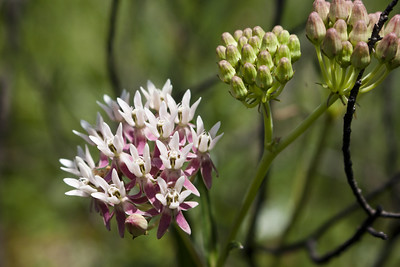
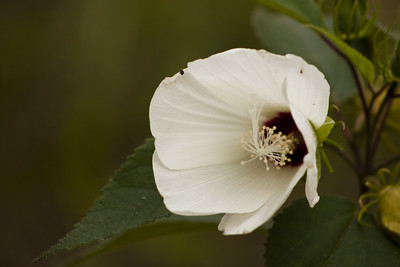
I first heard about the Solo Tract at the Big Thicket from Linda Leinen when she started a blog series called A Year of Going Solo earlier this year. Since seeing her posts, I have dipped into this tract myself twice, the most recent time back in May. It’s very close to the Big Thicket’s Interpretive Center which makes it easy to access if you are short on time but need to get into the Thicket for a few moments. Some highlights from that trip: Wooly rosemallow, Hibiscus lasiocarpos blooming. Tall green milkweed, Asclepias hirtella—I was very excited to see this one in bloom! I love when I come across…
-
Chance meeting with Lindheimer’s beebalm (Monarda lindheimeri)
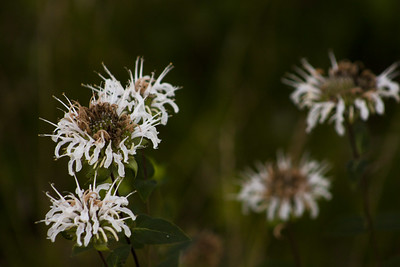
In early June I drove up to Fort Parker State Park hang out with a couple of friends for the weekend. Typically we get an Airbnb or a cabin at Fort Boggy State Park, but Stephanie and her husband recently bought a travel trailer and we have upgraded our options for meetups! I’ll write more on that trip later, but before I left I scouted directions on how to get there. I chose a slightly slower route in favor of looking for wildflowers and the chance to iNat in some lesser known locations. That decision paid off really well! I wasn’t more than 30 minutes from home when I spied,…
-
Mahogany Hammock Trail at Everglades National Park (2007)
Let’s travel back to Florida and less depressing things like losing a state park—because nature continues on even while we fight to save it. I actually remember very little about this trail. I can recall part of the boardwalk and that there were mosquitoes but I don’t recall seeing some of these plants! The peeling skin-like bark of a gumbo limbo tree, Bursera simaruba The fruits of a Florida strangler fig, Ficus aurea A nurse log filled with long strapferns, Campyloneurum phyllitidis…a common scene in many swampy hammocks in south Florida. An orchid that has died, probably a butterfly orchid. Hammock viper’s-tail, Pentalinon luteum. This is one of the plants…