Image Map


Read OW in your inbox!:

Delivered by FeedBurner


Thru-Hiking the Florida Trail How-To
Little Lake Creek Loop, SHNF
Our Work in Print
Thru-Hiker Deliciousness
The Greatest Mountain

Sorry. No data so far.


LINKwithlove


Nature Blog
 Network

  • May 2012
  • April 2012
  • March 2012
  • February 2012
  • January 2012
  • December 2011
  • November 2011
  • October 2011
  • September 2011
  • August 2011
  • July 2011
  • June 2011
  • May 2011
  • April 2011
  • March 2011
  • February 2011
  • January 2011
  • December 2010
  • November 2010
  • October 2010
  • September 2010
  • August 2010
  • July 2010
  • June 2010
  • May 2010
  • April 2010
  • March 2010
  • February 2010
  • January 2010
  • December 2009


  • Archive for the ‘Gardening’ Category

    Cercis canadensis
    March 2, 2012

    redbud
    April 16, 2012

    nast3
    I love our variegated nasturium flowers. I think they are my favorite!

    onionflower
    The onions decide to start trying to flower and we pinched the flowers off to give the bulbs a bit more time to fatten up.

    coneflower

    peas2

    nast2

    nast1

    maroonbluebonnet
    We had some maroon bluebonnets decided to flower at the last minute.

    sweetpeas
    Sweet pea blossoms along the back fence line.

    honeysuckle
    The honeysuckle aroma is so delightful! I love walking in to the aroma!

    cucumberpoles
    The County Fair cucumbers were planted a bit far apart so Chris helped them out by putting bamboo poles across so they could vine easier.

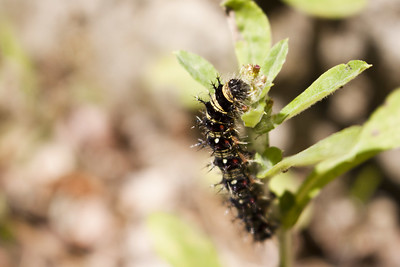
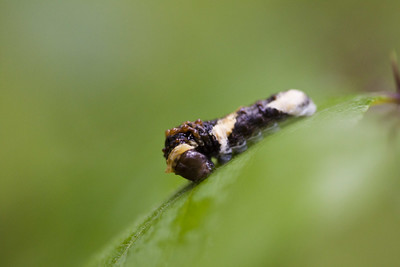
    caterpillar
    Caterpillars were going crazy eating lettuce and other plants. We did a round of BT to help control them. I always feel bad about that. In Florida we had some hornworms on our tomatoes but not enough to cause concern so we always left them to nibble. This was a little out of control though! I looked this caterpillar up but have yet to come up with a viable species—my guess is some kind of tiger moth, but I just don’t know. Anyone have an idea? (Maybe a salt marsh moth But I’m not sure on the body patterns)

    lettuce
    And we ripped all of the remaining lettuce out of our bed in order to make room for eggplant. I was a bit disappointed to do this, mostly sad that I could not eat all this lettuce. Perhaps if Chris had been around this spring we might have eaten more lettuce, but I just can’t eat an entire bed of lettuce. We resolved to do half a bed next year as it will be more manageable. Most of it was starting to bolt anyway and it ended up in the compost pile. So, I don’t feel *too* bad, the compost pile needed greens.

    Chris and I are continuing to think about summer crops and where we are going to fit everything! We need more room!

    beetsoup7
    We had a scattering of beets that survived a round of seed planting back in January. They were part of the bad carrot planting we had, rains too heavy and washing away the seeds. But a few stuck and it was finally time to pull them up and replace them with peppers. When we were pulling them I was reminded of this recipe from a new-to-me blog that I bookmarked over a month ago. I dug it up in my feed reader, looked it over and decided it was doable.

    As you see above, all of that came from our garden. The only thing that did not come from the garden was the garlic (not ready yet), tarragon and bay leaves (don’t grow them), coconut and olive oils (need a plantation for those), and salt and pepper (don’t own a salt flat and don’t grow the black pepper plant either). So, all in all, I was doing pretty good.

    beetsoup6

    beetsoup5
    We pulled one leek and one onion early…and I added a few things into my soup that weren’t in the recipe linked above. I added garlic chives, dill and the onion—she only called for a leek. After pulling the one leek, I will definitely be growing a lot more of them in the future. Oh, and the carrots, she didn’t call for carrots but I needed to thin mine out.

    beetsoup4
    I roasted the carrots and beets for an hour at the suggested temperature. The skin peeled right off the beets!

    beetsoup3
    Sautéed up the garlic and onion mixture…

    beetsoup2
    Then put the beets in with about four cups of water, letting it boil for a few minutes and then simmering for about 10. Afterwards I put it in increments into my food processor to blend it….

    beetsoup1
    And then it was done! Tastes pretty darn good! It has an earthy flavor too, very ‘dirty’…it just smells of the garden! I will definitely make this again next year when it is beet season once again!

    Slowly we’re starting to think about purchasing our first house with some land to go with it. Not a lot of land, but bigger than your typical suburban lot. It’s funny, we’ll be married 10 years this June and for those 10 years we’ve rented our abodes, bummed with our parents for awhile, called a flame orange tent home, as well as a couple of motels/hotels. So, it is a little strange to think that we would be actually putting money towards something that in 15-30 years we could call our own (because really, it is still the bank’s until we pay it off).

    With that I’ve starting seriously thinking about what I want in my yard, how I want my house to look—well, not quite, I have ideas, but honestly I’m thinking on the outside realm more than anything. I’m thinking about the food I want to grow, the flowers I want filling the rest of the yard, the types of trees I want if the yard isn’t already full of other trees, and also the animals I want.

    Chris wants to keep bees and I want to keep chickens. Apparently Chris wants to grow his own wheat, too. I asked him about sugar cane but he said we could continue destroying the Everglades for that. All of these thoughts about what I could grow in the semi-near future had me doing some internet reading on homesteading, gardening and small-scale farming.

    What I was surprised to learn was that there was a backlash against the whole urban farmstead/do-it-yourself trend. Frankly, I was dismayed about the backlash. Now, I don’t expect everyone to want to grow their own food, cook organically, go to the farmers market, or go out back to get the eggs for the cake they are baking that night, but what I do expect people to understand is that we aren’t that far away generationally from when all of these things were mainstream in society. Perhaps 60+ years of so-called conventional farming and lifestyles have deluded our sense of heritage, but more than likely (I’m generalizing here, I realize people come from all walks of life and heritages) if you look back to your grandparents, maybe further to your great-grandparents, you are likely to find someone who grew most of their food or cultivated a large garden, someone who sewed clothes for the family or made quilts to keep them warm at night.

    The backlash wasn’t strictly related to food, it also seeped into the creative realm in regards to people picking up knitting and crocheting.

    A term I was only recently introduced to by Keely is the word femivore. She told me about it so I did some searching and it stemmed from this article with many negative rebuttals on the internet about the word. While the word does have some weirdness to it, I don’t get the hatred of the back-to-your-roots idea. Some of the rebuttals were in regards to a glorification of the past, farming and simplicity, others were about th efeeling of women needing to have it all, a career and doing it all themselves at home (which is so ironically funny because lots of men are doing both, too (and I loved this cached rebuttal, original link is not working for some reason)). Of course all of this was completely different 100 years ago when what grew or didn’t grow meant starving or going without for much of the year. It meant you couldn’t pay your bills or you had to barter to get things you needed. Sewing your own clothes or piecing together a quilt might not have been necessarily to give as a gift for a baby or wedding but instead it was because you only had five dresses and you couldn’t afford another so you had better mend this one until it was in rags. And then you made a quilt out of the rags.

    I get that. Our times now are not our ancestor’s times then. On the other hand, outside of the ‘trendy’ movement to do all of this, there’s everyone else who has been doing it anyway, despite mainstream living; the people with land in the country who keep a donkey, horse or cow, who might keep chickens in the yard all the while living a seemingly regular life. It’s not something new. Gardening is one of the most popular hobbies in the U.S. and whether you are growing food or a rose garden, you are still carrying on in some form, part of your heritage.

    I think the thing that bothers me most is when simplicity and doing things the old way is turned into somehow that you are being elitist. Small back-to-nature magazines have been around for a long time, heck Mother Earth News has been rocking it since 1970. None of this stuff is new. It’s only undergoing a revitalization and becoming more understood and less shunned—or somewhat less shunned. I remember in 2000 when I was in college, I joined the Sierra Sea Club. Their primary objective, other than general environmental issues, was to promote organic foods. This was the first time I’d heard the term and I remember it being rather strange and weird. Most people just equated it with PETA and crazy hippies. Here we are 12 years later and the term is widely known, though sometimes slightly green-washed. Being organic/living organically, in the sense of returning back to your roots and doing things a more natural way will easily get you labeled ‘crunchy’, ‘granola’, ‘hipster’, or ‘hippie’. If my great-grandmother who had chickens in her backyard in Azle, Texas would be called a hipster, then let me be one too! Organic is doing without all the extra crap—whether that is living an organic life with less stuff in your personal life or taking it the foodie way and purchasing your food without GMOs, pesticides and fertilizers.

    There will always be the naysayers and people who don’t agree. And they are right, growing things for yourself, learning how to build things or taking up an old craft, isn’t for everyone. But that doesn’t mean it needs to be denegrated.

    Me, I prefer to keep the crochet, remembering the jars of food stored on the tight shelves in my Nanny’s small hallway off her kitchen, thinking of the moments of sitting outside with my family as a kid—talking and playing around in the yard, going on campouts and learning about the natural world, cooking up old recipes from both of my grandmothers (reading their scrawl almost makes me think they are there), and trying to gather up all the bits of information I can on what is left in my natural heritage. I’m so glad I learned to make my Nanny’s chow-chow recipe because now when I taste it I am taken back to her kitchen in east Fort Worth, the blue morning light in the kitchen, the table a little sticky from her millions of things stacked on it—the margarine bowls and placemats, the smell of her freezer as my brother and I opened it to get the Blue Bell (or grocery store special) ice cream out. When I, someday, gather eggs from my coops I want to think about the chickens in my Granny’s yard, the scraps from lunch or dinner carried out in a round, tin plate. As I mow the lawn around my future house I want to think about my dad mowing his lawn, how the sound of the mower starting up signaled us to get outside and play, the fresh grass beckoning to be walked on.

    That’s what it is all about. Because it is all we have. If we can’t remember some of the basics, learn the things our predecessors knew, we’re just losing a culture. But maybe there’s hope?

    taproot

    A couple of weeks ago I was reading a blog when they mentioned Taproot Magazine, a new publication partly founded by Soule Mama. I used to read her blog often but haven’t much in the last few years so I went to the magazine’s website and to her website to read more about it. Instantly I was enamored and I had to have it. So I subscribed as a founding subscriber for a discounted rate and between doing that and reading more blogs with photos of the magazine, I’ve been wondering where mine was.

    Well, yesterday I opened the mailbox at lunch to see it sitting there. I was so happy but disappointed because I was returning to work and couldn’t take my time savoring it. I was finally able to read it last night, going to bed early to slowly read the articles.

    If you like gardening, farming, hand crafting, and the simple life, this magazine is for you. I know it seems pricey for a magazine published four times a year, but it is jam packed with great writing and photographs and the only advertising was a pull out pamphlet for Nova Naturals, but other than that not an inkling of advertising.

    I’ve already checked out their submission guidelines and I would like to try my hand at submitting something in the coming months.

    The peas are from our garden, harvested yesterday evening. They are doing great but our heavy rain on Tuesday bent a few of the sugar snaps so I had to tie them to the trellis. I’m holding off on cooking these until Chris gets here for a three day weekend, tomorrow.

    Happy, happy!

    The Ones We Bought

    earlygirl2
    In an effort to jump start the season of tomatoes we decided to buy a few plants already started at our local nursery. I’m not big on hybrids but Chris’ mom loves Early Girl and so we decided to give her a try.

    cherokeepurple2
    I’ve wanted to try Cherokee Purple for years but it has never made it into our garden. I have seeds, in storage. We’ll see how she performs for us.

    cherokeepurple1
    I ended up with two Cherokee Purple’s because when I went to grab this one, I broke the tomato. Guilty, I had to get a second one and pay for both. I decided to try sticking the broken end into the pot to see if it would root, but also to see if the original rooted part would re-leaf too. It didn’t, but the broken piece I stuck in did root! I didn’t do anything special, had no rooting hormone and didn’t actually particularly care for it for several days after because I went into the field for work. But here it is still living!

    yellowpear
    I think I am going to like the yellow pear. I love small, eat-off-the-vine types.

    The Ones We Started From Seed

    For most of our tomato planting existence we have started them by seed. It’s pretty awesome to see them through the whole cycle.

    amazonchocolate2
    Amazon chocolate is a tried and tested tomato in our garden. It has great flavor and grows rather large. It is one of Chris’ favorites.

    amazonchocolate

    Sungold
    Sun Gold’s are one of my favorites, a very prolific tomato. I’ve saved seeds from them in the past and grown them again and frankly, I felt they were pretty much the exact same thing. Being an F1 hybrid they aren’t supposed to come back true from seed if you save the seeds, but the ones I had were yellow, the same size and tasted great.

    Arkansastraveler
    Arkansas Traveler is my very favorite tomato. If my niece were here I’d have her say, as if she’s talking to our cat Samson, “You’re my best, old friend”. Because really, it is my best, old friend.

    sabreukrainian
    This is another one of Chris’ favorites, Sabre Ukrainian. It is a sauce tomato and is excellent for making into spaghetti sauce. We get our seeds (when we aren’t saving them) from Amishland Seeds. They are pretty rare/uncommon so you don’t get many seeds for your money. Use them wisely!

    That said, we have several other tomato seedlings that need to go in the ground still but we’re waiting for a few other beds to empty out before putting the tomatoes in. I wish I had about 10 beds dedicated to tomatoes.

    What are you favorite tomatoes to grow?

    garden11
    We had two, mostly straight, days of rain last weekend. During the breaks in the rain we spent a little time in the garden getting seeds in the ground and transplanting tomato seedlings. I took all of these last Sunday evening after the rain has finally stopped and the blue sky came out.

    The photo above shows the sugar snap pea trellis but on this side of it will be some long beans. We planted salvia out front to entice the butterflies and hummingbirds.

    garden10
    The sugar snap peas from below.

    garden9

    garden8
    The front half of this plot is spinach and flat leaf parsley. Chris was able to start sweet basil seeds on the other half.

    garden7
    I am looking forward to the flat leaf parsley being used, drying it and tossing it in my meals fresh.

    garden6
    Malabar spinach was known to me in Florida where several gardening ladies I knew through GardenWeb grew it in their gardens. I never had the chance to try it but when I saw it at our local nursery I decided to try some. I’m excited to be able to eat something leafy and green during the summer when the ‘regular’ greens will be finished.

    garden5
    The onions have started bulking up. This is perhaps one of the crops I am most looking forward to harvesting in May.

    garden4
    The bluebonnets are still prolifically blooming.

    garden3
    Just a week ago this bed had kale in it. Aphids had taken over so badly, beyond organic pest control methods, so I ripped it out and in its place is silver queen corn.

    garden2
    The cucumbers are getting their second leaves.

    garden1
    And the fig trees have started leafing out as well as putting on fruit!

    Things are changing by the day right now!

    sunflowerseed1

    sunflowerseed2

    sunflowerseed3

    sunflowerseed4

    I popped into a Dollar General on the way home from visiting Chris at his field hotel two weekends ago to grab a few goodie package items to send to my niece and nephew. The seed display was promptly placed in the middle of the aisle near the cash register and I could not continue on, I had to stop. No, the seeds weren’t organic and who knows where they were from, but I was so enticed by the super cheap price, somewhere less than $0.50 each for most packets, that I grabbed up a few packages of sunflower seeds, ageratum, celosia and zinnia. I can’t wait for the celosia, my great-grandmother on my dad’s side had several varieties growing outside her back kitchen door and I spent a lot of time when we visited messing with the flowers and watching the seeds float off to the ground.

    The sunflower seeds were planted March 3rd and a week later on March 11th they were up, looking like this. Only a week!

    I didn’t use the super-awesome macro lens for this, I used my normal reverse macro technique. My brother was lamenting about the trout lily photos earlier this week and I told him it was an easy fix if he wanted to have similar photos. Buy a reverse lens mount and learn how to use it. It works great, you just have to work with the depth of field, holding your breathe so you don’t shake the camera, and figure out light conditions. Oh, and be sure to turn off the camera when switching the lens around so you don’t suck in all the dust and have it on your camera mirror. Then you just have to be sure not to scratch the other side of the lens as it is backwards now. But, really, its is a fun way to get macro shots if you can’t afford a macro lens. We have two mounts (actually there might be three), one for our 50mm and one for the 18-55. I use the 18-55 the most.

    The other seeds I planted have also sprouted but I have yet to get their portraits. Soon….soon.

    bb1

    bluebonnet2

    We have one plot in our garden that has radishes growing but otherwise we have filled it with bluebonnets we bought at a garden center and bluebonnets we seeded, along with a few other non-edible flowering plants. I like having a small section dedicated to flowers, especially since we aren’t focusing on collecting plants right now.

    I’d been checking on the bluebonnets but hadn’t had any inkling that they were ready to bloom. Then one day last week I walked right up and the blue-purple flower stood out and stunned me with its brilliance.

    Finally, the bluebonnets were out!

    It seems like nature has switched ‘on’ and the plants are ready for spring. Overnight, blooms are coming out of seemingly nowhere.

    sugardaddypea
    Sugar daddy snap pea bud

    sugardaddypea2
    Sugar daddy snap pea blossom

    brussels sprouts
    The Brussels sprouts have not done that great. Unfortunately we have a row of beds that gets a lot of shade in the winter. The shade comes from a rodeo shelter that blocks a lot of sunlight from mid-morning to mid-afternoon, thus some of the plants in this section are stunted. I think the sprouts would have matured more had they had access to more light. I’ve been eyeing their leaves to add into my morning green smoothies, but haven’t tried them yet.

    sugarsnappea
    Sugar snap pea blossom

    sugarsnappeabed
    The sugar snap pea bed with nasturtiums. Looking at this I really think we could utilize more of the space on the sides next time around. Or even now, maybe a row of radishes?

    lettucebed
    The lettuce that is still hanging in…the arugula has long since bolted and some other lettuce has started doing the same. I’m not much of a winter salad eater—unfortunately that’s when I get lettuce.

    dill
    Some of the dill going to flower. I’m going to let this one seed so I can save the seeds for cooking and for sowing later. We’ve got dill coming up in all sorts of places, its a good filler and we’ve been drying it at home to use in cooking.

    tomatoes
    Even though we had started a lot of our tomatoes from seed, we went ahead and bought four plants from our local nursery so we could get a head start. I didn’t make note of the varieties so I’ll have to write those out later.

    It’s looking to be a good spring!

    Related Posts Plugin for WordPress, Blogger...