Image Map


Read OW in your inbox!:

Delivered by FeedBurner


Thru-Hiking the Florida Trail How-To
Little Lake Creek Loop, SHNF
Our Work in Print

Sorry. No data so far.


Nature Blog
 Network


LINKwithlove


  • February 2012
  • January 2012
  • December 2011
  • November 2011
  • October 2011
  • September 2011
  • August 2011
  • July 2011
  • June 2011
  • May 2011
  • April 2011
  • March 2011
  • February 2011
  • January 2011
  • December 2010
  • November 2010
  • October 2010
  • September 2010
  • August 2010
  • July 2010
  • June 2010
  • May 2010
  • April 2010
  • March 2010
  • February 2010
  • January 2010
  • December 2009


  • Archive for the ‘Outdoors’ Category

    vernonia4

    vernonia3

    vernonia2

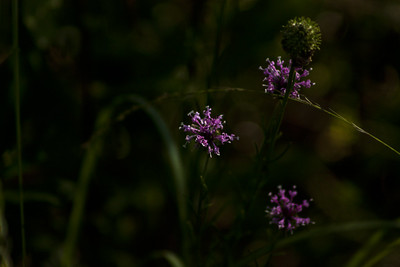
    While we were doing our field work in the Big Thicket this late spring and early summer we kept coming across this plant in its pre-blooming stage. No one could figure it out until finally it was identified by Ron Lance. And not much later the plant started blooming and it was beautiful! The tell-tale white stripe in the leaves helped us identify it later on without blooms.

    This particular plant was photographed at Tandy Hills. I was relieved to see a plant I knew among the many unknown prairie plants that abound the preserve. There were a couple of bugs we tried to photograph that were hanging out on the purple inflorescence but I didn’t get any spectacular shots.

    More info:
    +Illinois Wildflowers
    +Wildflower.org
    +USDA plant database
    +Seeds from Prairie Moon—can’t verify the company since I’ve never ordered from them, but if you are looking for your garden, here’s an option.
    +Houston Audubon

    bluebell2

    bluebell4

    bluebell5

    bluebell7

    bluebell6

    bluebell3

    bluebell

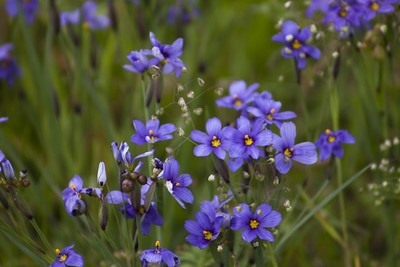
    This annual Texas native is not very common, though we did see the ones shown above at Tandy Hills. The subtle blue-purple flower deserves more respect than it gets, being out shown by other grand Texas natives like the bluebonnet. You may know this genus as also Lisianthus, which can be found at garden centers. Wildflower.org suggests their rarity is due to their beautiful stature and having been picked too much that they cannot reseed. In the gardening world there are many varieties and cultivars, so you’ll be able to find some variety.

    More information:
    +A really good write up on the Eustoma genus and the differences regarding the species.
    +Info on propagation from seed
    +Wildflower.org information.

    camrad5

    camrad4

    camrad3

    camrad2

    camrad1

    This beautiful vine can sometimes be mistaken for Bignonia capreoleta, or cross vine. While the similar red flowers might fool you, taking a look at the leaves will change the story as the trumpet creeper vine has pinnately compound leaves.

    While this is a native plant, it is also quite weedy and can be invasive. If you are looking for a space to be completely covered in vines, then I would recommend this plant. If not, you might just leave it for the woods and natural space instead. As a hummingbird attractor, this is one great plant since the red tubular flowers offer the perfect sipping device for the birds to get nectar from. If looking to start from seed, the pods are readily available in the late summer and early fall to collect and start a plant from seed.

    More information:
    +Floridata
    +USDA
    +Hummingbird information
    +Wildflower.org

    rabbit4
    A couple of evenings ago we were walking my brother, niece and sister in law to their car after dinner. I was heading back inside when I noticed something dark in the grass. Thinking it was a mud clump or, well, I really don’t know what else, I went to check it out.

    rabbit3
    Chilling in the shade, even though it was still 100* after 7pm, was this little rabbit.

    rabbit2
    And it was little. My hand here for comparison.

    rabbit1
    A few inches away was a dead bug being feasted on by ants and subsequently some ants were visiting this little rabbit. I got fairly close to the poor thing but it wouldn’t move. Mom ran the hose to flood away the ants and to cool the rabbit down a little, and I eventually kicked the bug away so the bunny wouldn’t be overrun with ants.

    We came out a few more times that evening but by the next morning it had hopped away. Good luck little fella!

    I love when wildlife shows up in the suburbs. We certainly didn’t have this growing up—finally the neighborhood has aged enough that wildlife has returned. My friend Sara even wrote an ode to a dead coyote.

    In case you missed it: Part 1 & Part 2.

    Wrapping up our tour of the Watson Preserve a few months later…

    chris
    We begin the final part of the tour through the pitcher plant bog that was actually quite dry.

    field3

    field2

    pink
    A bud of the Calopogon tuberosus orchid.

    plant

    field
    Love the orchids intermingled with the pitcher plants in this one.

    sarracenia
    Pitcher plants certainly have their own personality.

    colicroot
    Love the unassuming yellow colicroot, Aletris lutea.

    flowers
    And the beautiful pitcher plant flowers…

    greenlynx
    I also love finding the green lynx spiders tucked under and between leaves. They can be finicky to photograph that’s for sure!

    yellowflower

    trail

    me
    I really should stop and take photos of myself more often. I try to snap one of Chris whenever we are out but rarely do I get one of myself. A few years ago I did self portraits for awhile and they were fun but I was definitely self-conscious.

    erythrina
    Erythrina herbacea, coralbean leaves.

    path2

    path

    house
    Geraldine Watson’s beautiful home nestled into a sand hill near the pond.

    milkweed
    More beautiful milkweed on this property.

    ferns

    If you are ever in the boonies of east Texas definitely drop by this beautiful property and check it out!

    Let me tell you something. This post was a booger to put together. Why? Because I did a lot of research. Why? Because I don’t know everything—duh!

    First, a brief explanation of the Local Adventures title. While some aspects of it might be similar to Nature in the City posts they will differ in that they aren’t going to be strictly nature or in the city. NITC posts focus a bit more on parks/areas that are within an urban environment and they may or may not have a playground. (Now I am reminded I need to do some NITC posts again soon.) Local Adventures will focus on anything from a hike within a natural area nearby or a few hours from wherever I live (still transient at the moment) to canoeing and kayaking or maybe rock climbing…basically anything adventurous. So, really it is a bit of a work in progress as I develop the series and roll with it.

    Now I bring you the first in the series. I will eventually cover more of the trails at the FWNC so stay tuned!

    Location: Fort Worth Nature Center
    Trail: Cross Timbers Trail, 3.37 miles round trip
    Activities: Hiking, trail running, photography, nature/wildlife viewing
    Bring Water and a snack!

    The trail begins from a parking area near the West Fork of the Trinity River and crosses a levee that is adjacent to a channel to the east as you walk over the river. The river is dammed up and channelized through several lakes in this area.

    marsh
    This is the area to the west of the levee that is marked on the map as the lotus marsh. Didn’t see any lotus, though.

    path
    Once down the levee the main trail begins and you can choose which way to go as the path is a circle and will bring you back to this point.

    logs

    chris
    On the Florida Trail it became a running joke that when we saw a bench Chris would have to sit on it. Since the FT is not as developed as the AT, where shelters and benches are common, we usually made do with stumps or the ground. So, Chris got his bench on this little trail.

    path2
    It was a cloudy morning the day we went out so the woods appeared dark and mysterious. Some of the growth on the trees reminded me of the epiphytes covering the trees in Florida.

    adrift
    On the surface it might not appear that a lot is going on but one has to look close to see the smaller bits of excitement and beauty.

    veg
    Watch out, the nettles will bite!

    vitis

    grape
    Chris tried one of the grapes back at the parking lot and informed me that it was pretty sour! Sounds like it would be good for jams or wine!

    unknowns
    What took me the most time for this post was researching the plants and identifying them. Don Young with Tandy Hills sent me a plant list for TH and the FWNC so I utilized that heavily. If I can narrow something down to a genus or family and go from there I will, and then it is all about my friend Google. But if I don’t know where to start then I throw them out there for the world to try to identify—-so if you can help me out, lemme know! Edited 7/24/11: Someone at FW Nature Center has told me the shrub is a privet while the yellow is of the primrose family, possibly Oenothera rhombipetala. Thanks Suzanne!

    trail

    skull
    Sometimes fauna is harder to come by than flora but we managed to find this skull. I poked around on the internet looking at a few skulls I thought it might be and I have a friend in Florida taking a look at it, too, but my first guess is that this is a coyote skull. I’m basing the guess on the shape of the nose. I initially was going with opossum or bobcat but I don’t think those are right. If someone else is good with skulls by all means help me out! Several people have said this is a raccoon, I’m still on the fence on this—stubborn—will have to look at the whole skull again soon.

    field
    Perhaps almost half way through the trail opens into this beautiful field allowing for more diversity in blooms.

    gaillardia
    I was very familiar with Gaillardia pulchella aka: Indian blanket so I knew this was probably in the same genus—and whaddya know…I was right!

    vines

    wildlife
    Looking for wildlife is not necessarily about seeing a large mammal, though that is certainly nice, but looking for the smaller signs.

    oak
    Since the photos are a bit cropped here I’m not certain on the oak species but if I were to guess I’d say the left photo is a blackjack oak (Quercus marilandica) and the right photo is a post oak (Quercus stellata). And the insect gall—oh I did some Googling but I wasn’t positive on anything so I decided not to guess. And if you are curious about galls…all types of galls! and the site I was using for identification.

    lichen
    Lichen! Again, not the best with identification of that sort of thing, but wanting to learn!

    path3
    I think these two photos are my favorite from the entire walk. This is from the northern part of the loop and the lighting at this time was beautiful. It was so picturesque and made me think of the photos you see that you always wish you could be in—well, I was in one of those!

    creek
    Back on the levee to the car…this is the channel we followed.

    spiny

    creepervines

    sycamore
    A beautiful sycamore, Platanus occidentalis, definitely not as large as the one from Sabine NF.

    sunflower
    And finally, back near the car, sunflowers dotting the sides of the levee.

    A few weeks ago we went for an evening walk at Tandy Hills to scope out some Passiflora lutea that had been mislabeled as Clematis pitcheri in a TH newsletter. I got the general locale for the vine so I could verify in person and sure enough we found the plants and many, many more!

    fortworth2
    When we arrived we took the main trail from the playground out towards I-30. To the west was a stray shower over downtown Fort Worth.

    fortworth

    passiandjuniper
    We found the original plant…

    passiandclematis
    and then 50 yards down we found more passionvine and a clematis.

    passiandsmilax
    Smilax mixing it up with passiflora…

    variegatedpassi
    and maybe a variegated passiflora?

    passiflorafruit
    Some flower buds were seen on a large vine elsewhere but we did see fruit from the passionvine.

    thills

    chris

    thills2

    thills3
    I want to revisit this creek bed sometime, take more photos.

    thills4

    thills5

    thills6
    One of my favorite grasses, Chasmanthium latifolium.

    Always love this place. Scouted some potential sunset areas for later on this summer.

    asctub2

    asctub1

    asctub3

    asctub4

    This widespread milkweed species is a larval host to monarch butterflies in addition to queen’s and the gray hairstreak. It has has the similar long seed pod with silky hairs that other milkweeds use to propagate. Preferring full sun to light shade, once established these plants can handle mesic to xeric conditions comfortably. These species has a very hairy stem, as seen above, and is apparently not milky when broken like most milkweeds and is instead clear. Definitely add this one in for diversity in your butterfly garden and to attract monarchs!

    More information:
    +Wildflower.org
    +TPWD on the species
    +Aggie horticulture
    +Milkweed guide

    rhylat3

    rhylat2

    This little plant is actually a sedge but the unique white top turns it into a beautiful and unique wetland plant. A similar but smaller species, Rhyncospora colorata might throw you off at first but the latifolia species is significantly larger.

    Sandswamp whitetop sedge grows in wet areas and would make a great pond plant in a garden. There really not a lot to write about this one, but it is a pretty little plant that most people would over look.

    More information:
    +USDA plant database
    +David’s Garden information
    +Floridagrasses.org
    +Wildflower.org

    caltub3

    caltub4

    caltub5

    caltub2

    caltub1

    This orchid is a familiar orchid as we saw it often in Florida. It’s always nice to see familiar plants back here in Texas. This beautiful orchid, according to Wildflower.org gets it’s genus name from a Greek word meaning beautiful beard. You can definitely see that beautiful beard in the photos above!

    Calopogon tuberosus is a widespread ground orchid occurring in many states of the U.S. and is typically found growing in wet pine ecosystems. Flowering time is late spring to early summer—these were blooming in late May/early June at the Watson Preserve.

    As always with orchids, you should never collect them from the wild and find a reputable source to purchase them instead. Orchids require particular conditions to germinate their seeds and to grow and often, once taken from their original location, die when you get them home. Don’t risk it! While some states may have healthy populations, others consider the species to be threatened or endangered. A quick Google search will reveal several sites to buy them, so if you are interested in orchids in your garden, look there instead.

    More information:
    +Florida Native Orchids
    +Univ. of Wisconsin Botany site
    +USDA plant database
    +Raising rarities garden

    Related Posts Plugin for WordPress, Blogger...